
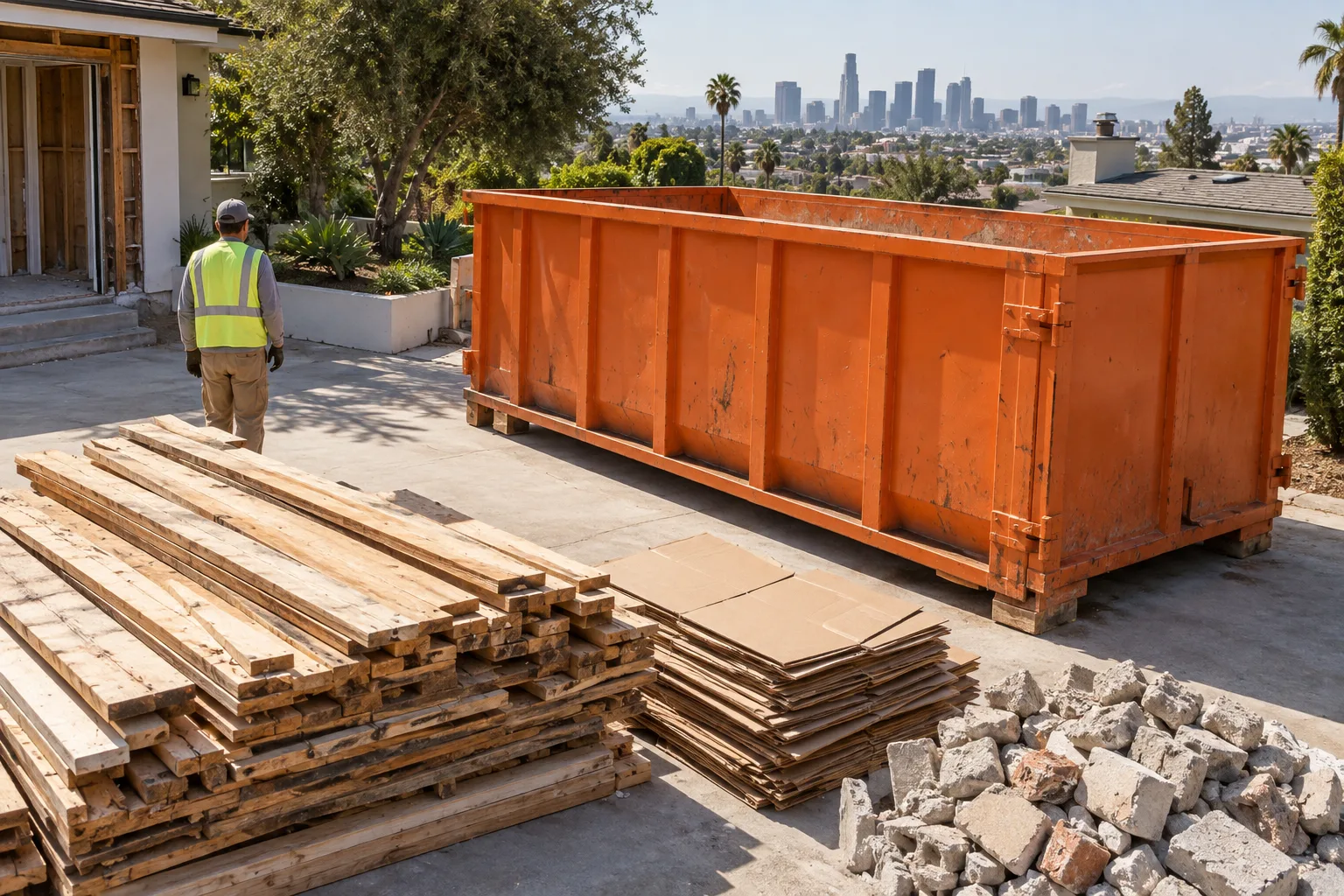
A good load begins outside the container. Sort questionable material first, clear the carrying path, and decide how bulky pieces will be moved without climbing or working beneath suspended loads. Stop if an item requires lifting equipment or a method you are not trained to use.
Set up the work area
- Keep children, pets, customers, and bystanders away.
- Use a clear path without loose cords, hoses, rubble, or slick surfaces.
- Wear task-appropriate footwear, gloves, eye protection, and other protective equipment.
- Do not work behind a delivery or pickup truck while it is moving.
- Keep the container door secured according to the provider’s instructions.
OSHA identifies vehicle movement, lifting injuries, slips, trips, falls, cuts, and struck-by hazards in waste collection work. Its guidance also says people should remain clear of dumping or lifting devices. See OSHA’s recycling collection guidance and construction struck-by guidance (retrieved September 21, 2026; United States).
Load with control, not speed
Place manageable items rather than throwing them from a distance. Break down empty boxes and disassemble bulky furniture only when it can be done safely and without creating sharp, unstable parts. Ask for help or mechanical handling when an object is too heavy or awkward.
OSHA notes that some loads are too heavy for most people even under good lifting conditions. Keeping a load close and using carts or mechanical devices can reduce risk, but technique does not make an excessive load safe. Review OSHA’s lifting and back guidance (retrieved September 21, 2026; United States).
Build a stable load
| Stage | Practical action |
|---|---|
| Before loading | Remove prohibited items and confirm dense material limits. |
| Lower layer | Place stable, heavier accepted items as directed; avoid creating rolling or shifting pieces. |
| Middle | Fill usable spaces with compatible material without forcing items against the sides or door. |
| Final layer | Keep everything below the marked top and fully inside the container. |
| Pickup check | Close and secure the door as instructed; clear the truck approach. |
Avoid the common pickup blockers
Material sticking above the rim, long objects protruding from the side, unsecured doors, restricted waste, and blocked truck access can prevent safe transport. Do a walk-around before requesting pickup. Do not move the container or attempt to compact the load with a vehicle or unapproved equipment.
Review the special-handling material guide, then call (213) 699-3004 if the load changes from what was scheduled.
Safety note: this article is general information, not jobsite training. Employers must follow applicable safety rules, and all customers must follow the provider’s container instructions.